Portfolio

I help companies put AI to work without the confusion and the overwhelm. I spent my career in HR, most of it inside a company that split itself into three, and I now build and run the AI systems I used to advise people about. Same person, both halves. Here is the work.

Jump to AI HR How they meet

What I build with AI

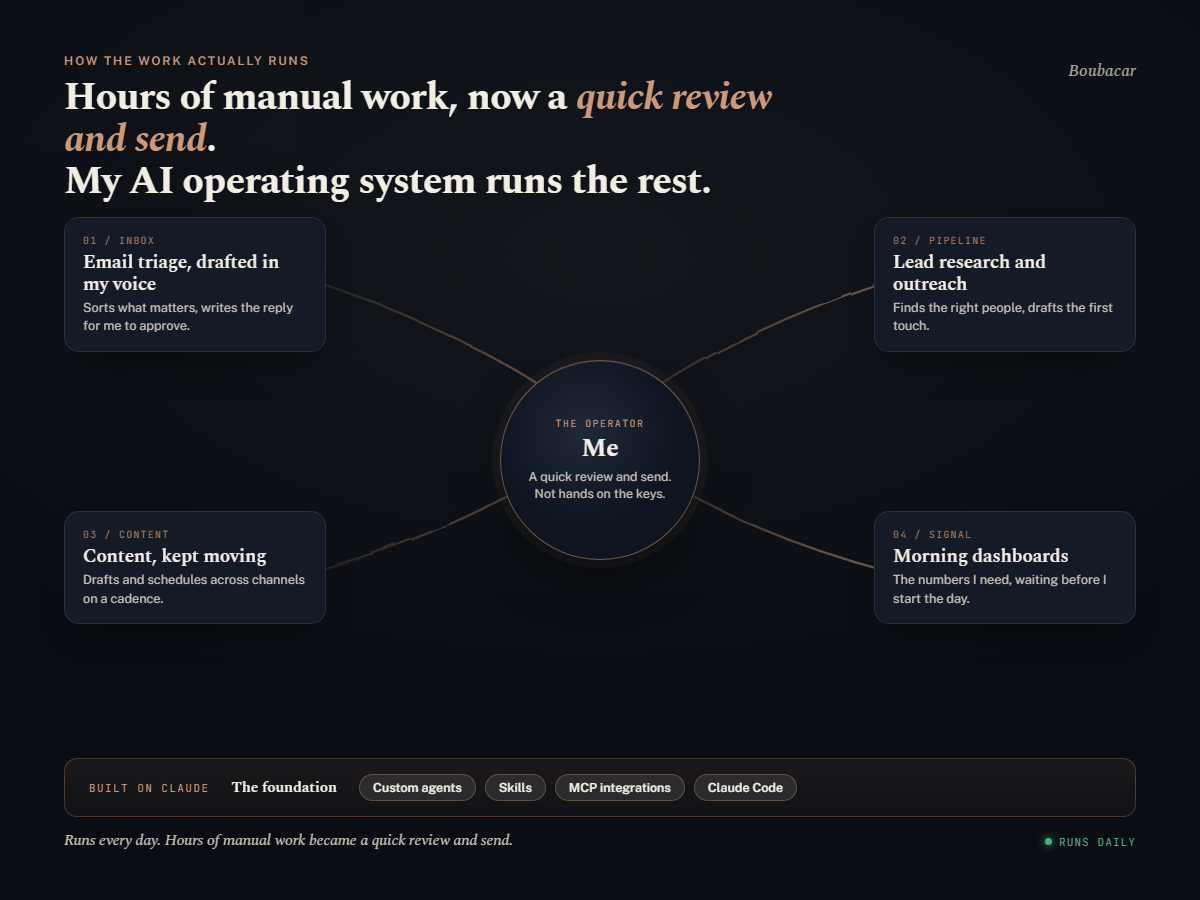
A map of the agents and integrations that make up the system

A multi-agent operating system that runs my own business

AI systems builder and operator

I built and run a multi-agent system on Claude that handles my own business day to day: email triage and drafting in my voice, lead research and outreach, content, and the dashboards I check each morning. It runs on custom agents and integrations into my real tools. It replaced hours of manual work with a quick review and send. It is the clearest proof I build AI that runs in production and not in a demo, and it is the same way I would set it up inside a business.
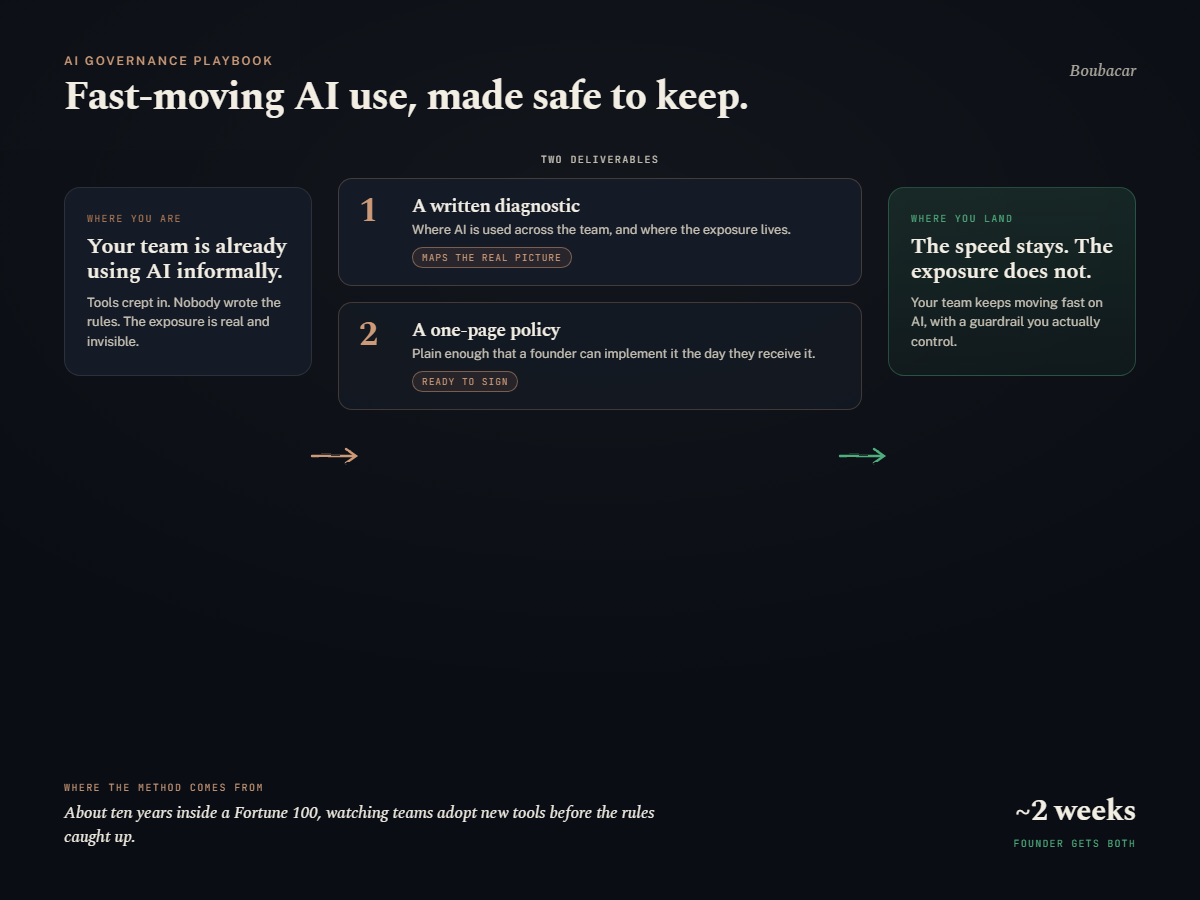
A chart showing how the governance playbook works

AI Governance Playbook (2026)

Author

I wrote a practical governance playbook for owner-operator firms, drawn from about ten years inside a Fortune 100 watching teams adopt new tools in predictable ways. It turns the messy reality of informal AI use into a written diagnostic of where AI is being used and where the exposure lives, plus a one-page policy a founder can put in place the day they receive it. The goal is simple: make fast-moving AI use safe to keep without slowing the business down.

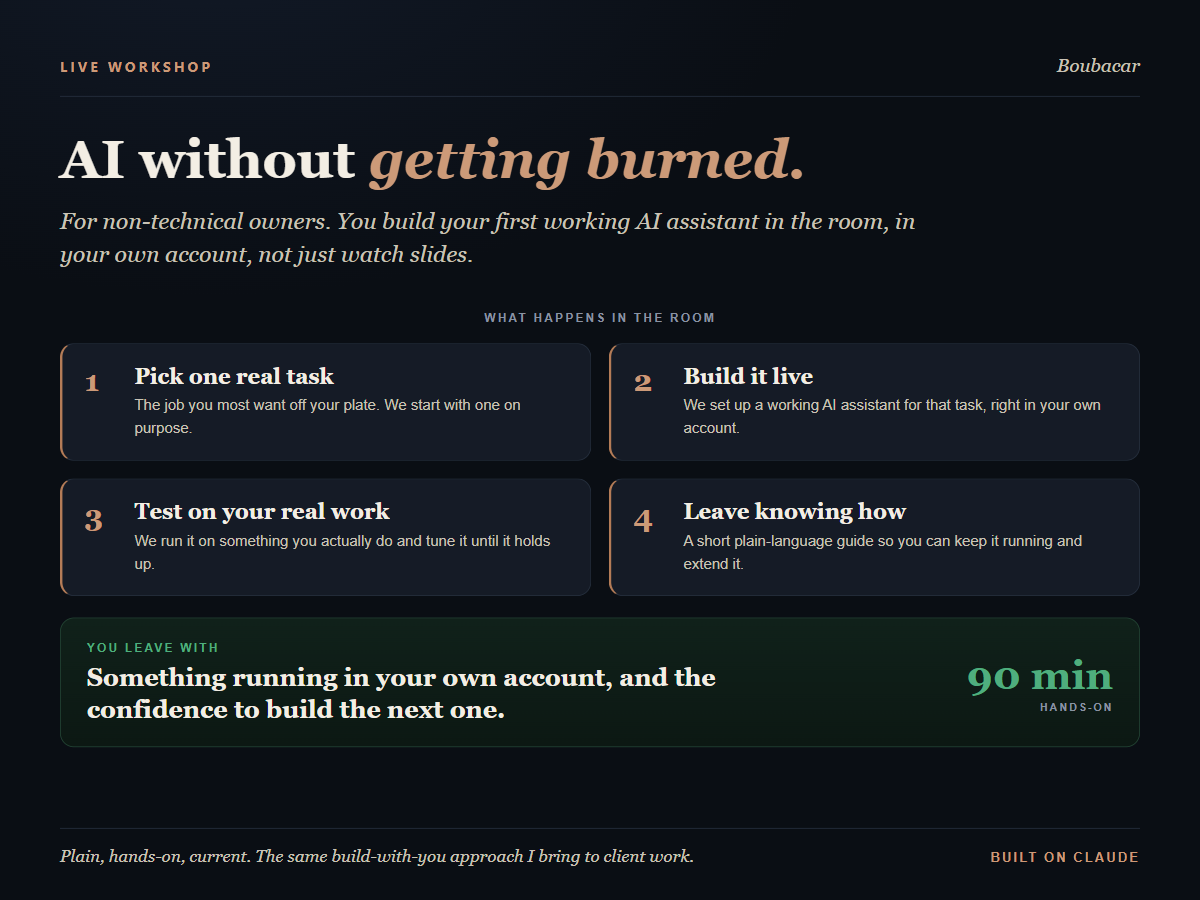
A card showing the structure of the live workshop

Live workshop: AI without getting burned

Facilitator and instructor

I run a live workshop that gets non-technical business owners to build their first working AI assistant in the room, not just watch slides. Each person leaves with something running in their own account and the confidence to keep going. I have spent years getting people who only care that something works to actually change how they operate, so the teaching is plain, hands-on, and current.

The live practice app running in a browser

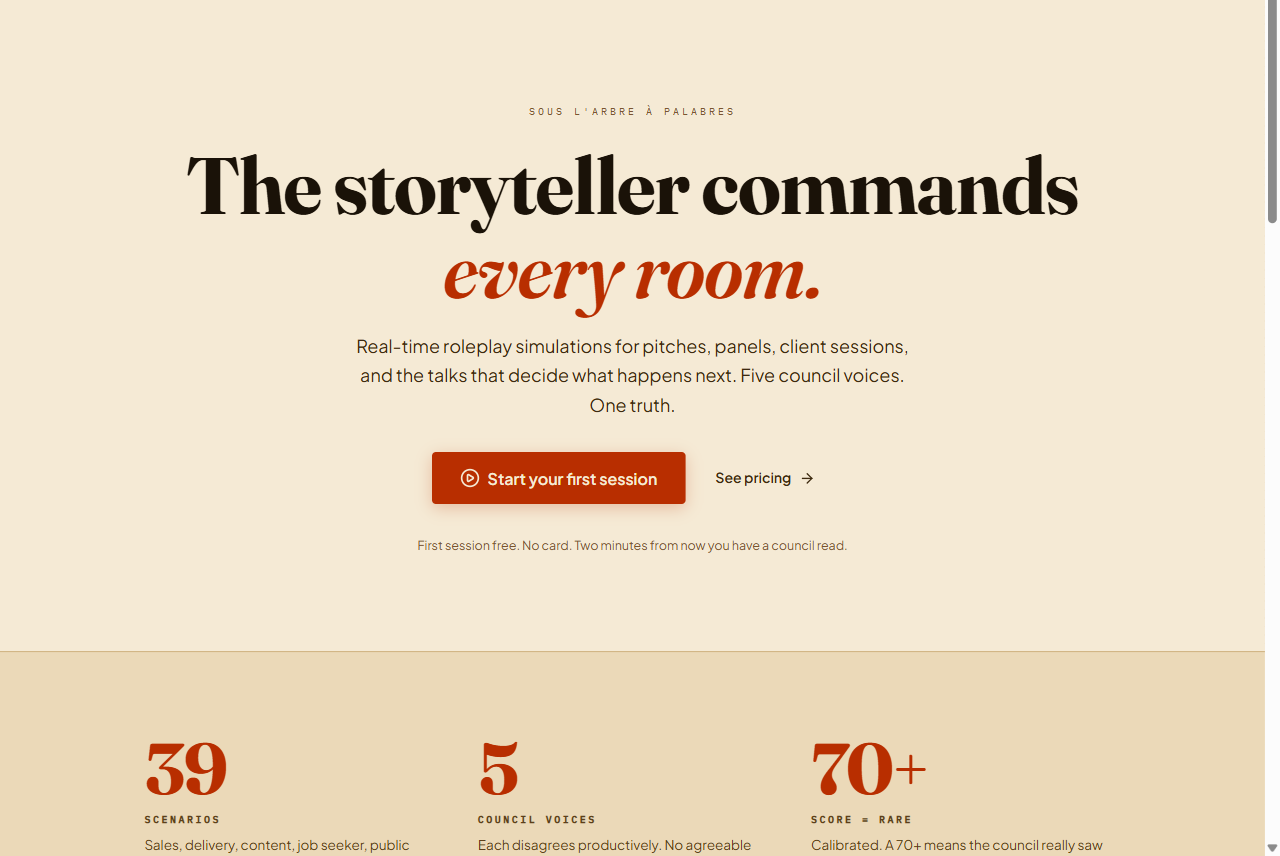
A practice app for high-stakes conversations

Designer and builder

I designed and shipped a live web app for rehearsing the conversations that actually decide things: a pitch, a job interview, a panel, a hard client call. You run the scenario out loud, and it reads back what most prep skips. Not just the content of what you said, but the delivery: your pace, your filler words, where you hedged. I took it from idea to a running product on the web, the same way I would build a working tool inside a business instead of just advising on one.

What I did in HR

Inside the company
Reporting process
6 to 8 hours by hand

a 10 minute workflow

An AI-enabled HR dashboard, built inside a Fortune 100 HR function

Role: designer

I designed and deployed a dashboard that took a reporting process running six to eight hours by hand down to a ten minute workflow. Leaders got their numbers when the decision was in front of them instead of a week later. This is the one I point at when someone asks whether I have actually put AI to work inside a large company, rather than for myself on the side.

Inside the company
HR roles changing
underneath people

a global skills initiative
while the business split into three

A global HR skills initiative inside an enterprise transformation

Role: led the initiative, as part of the HR transformation team

I led the global HR skills initiative that ran inside the enterprise HR transformation. The work was getting HR professionals ready for roles that were changing under them, inside a business that was splitting itself into three public companies while we did it. Senior HR leaders recognized it. It is the formal credential underneath everything I now do around AI adoption, because the hard part was never the tool. It was getting people to change how they work.

Inside the company
Average time to fill
around 60 days

under 30
on the part we finished

A hiring process rebuilt from the inside

Role: part of the Kaizen team

I was part of a Kaizen on a hiring process that thousands of hiring managers depended on. We went after the handoffs and the waiting, not the software. Average time to fill was running around sixty days and came down under thirty on the part we finished. I say it that way on purpose. We fixed what we started fixing, and I do not claim the rest.

Where the two meet

One artifact sits in both halves of this page. The HR dashboard was not an AI project I picked up on the side. It was a reporting problem I already owned, inside a real company, and the fix had to survive people who never asked for it. That is the part most AI work gets wrong. The tool was never the hard part. Getting people to change how they work is the hard part, and that is the job I had spent years doing before I ever automated anything.

If you want this combination pointed at something in your business, that is the work I do.

See how I work